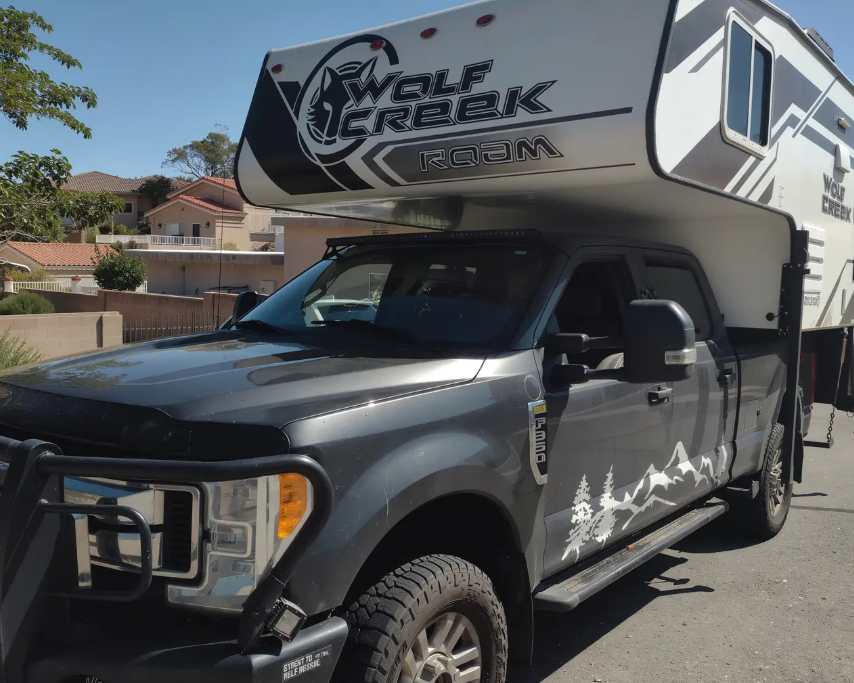
Somewhere on an American highway, there is a man driving a Ford pickup truck with an entire music business strapped to its back, and absolutely no intention of asking anybody's permission to enjoy his life.
There's water. There's power. There's a place to sleep. There's an acoustic guitar. And, perhaps most importantly, there's no tour manager calling at 5:12 in the morning to explain why the hotel reservation has vanished, the check is late, and somebody named Rick needs him in the lobby immediately.
Rick can go pound sand.
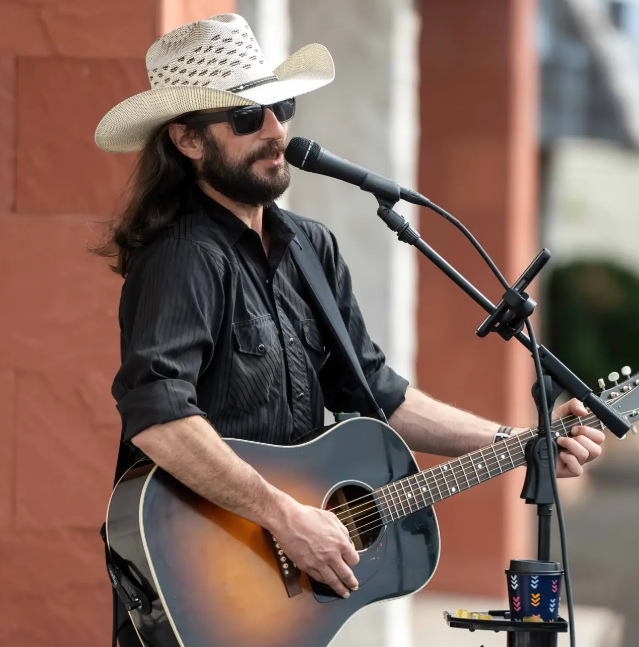
The man behind the wheel is Matt Baldoni. Singer. Guitarist. Veteran of stages so famous they practically require their own ZIP codes. And now, the self-appointed captain of a traveling musical republic with a population of one.
Well, one plus a guitar.
He calls himself the TruckHouse Troubadour.
It sounds like a character who should emerge from a dusty Western saloon carrying a six-string and an unpaid bar tab. Instead, it's a remarkably practical answer to a question Baldoni spent years trying to solve.
What happens when you love music, but grow to despise the business wrapped around it?
He didn't quit music. He fired everything that was getting between him and the music.
He didn't quit music. He fired everything that was getting between him and the music.
Matt's musical résumé is the sort of document that makes other guitarists quietly reconsider their career choices, then stare at their instruments like they've been personally betrayed.
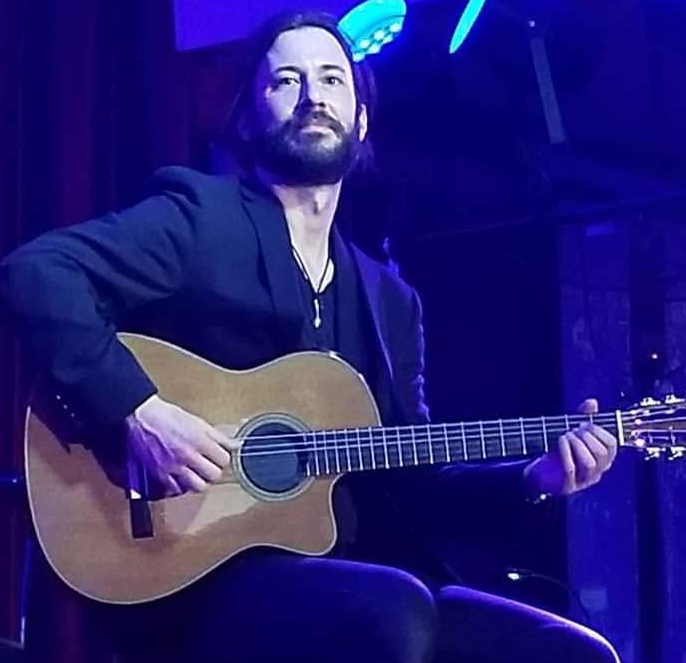
Raised in an Italian-American Catholic family in California's Sierra foothills, he started playing guitar at eight. He sang in choir, earned a classical guitar degree from Cal State Chico, and collected the Louis Armstrong National Jazz Award in high school.
Not exactly the résumé of a man who learned three chords last Thursday and immediately announced a world tour.
He put in the work.
And the work took him everywhere.
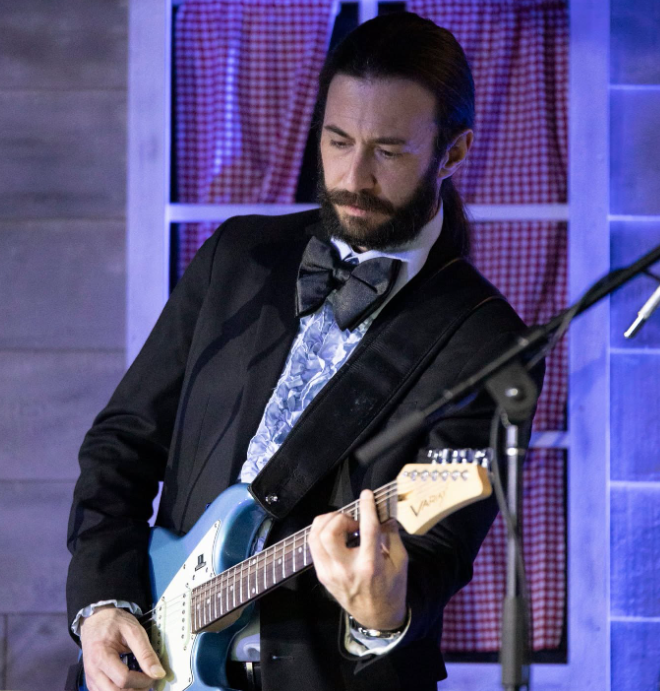
Carnegie Hall. Radio City Music Hall. Madison Square Garden. Red Rocks. Walt Disney Concert Hall. The kind of venues where the backstage hallways probably have better résumés than most performers.
His professional credits include Frankie Valli and the Four Seasons, Melissa Manchester, Taylor Dayne, Sheena Easton, the Platters, the Drifters, the Coasters, and an assortment of other names that could fill an entire oldies radio station without repeating a song.
In Las Vegas, he worked across productions and stages ranging from Mamma Mia! and Spamalot to Cirque du Soleil's KÀ, Legends in Concert, and the Venetian's Streetmosphere program. He led a house band for Fox Sports' The NFL Show. He taught at GIT in Hollywood.
On paper, magnificent.
In practice, according to Matt's account of life inside the industry, not always quite so magnificent.
Because behind the lights and applause lives an entirely different organism. A sweaty, sleepless, financially constipated octopus with eight arms, each one reaching for your time, your energy, your body, or your paycheck.
Touring can be wonderful. It can also be an endless parade of loading docks, bad meals, inadequate rest, broken promises, and people who somehow become experts at spending money they haven't paid you yet.
For Matt, the physical grind, the difficult personalities, and the financial frustrations accumulated. The very industry that had allowed him to make a living doing what he loved was gradually squeezing the love out of it.
Imagine being invited to play in the world's finest concert halls, only to discover the real performance is trying to get someone to honor an invoice.
Encore!
Now do it again tomorrow in another time zone, with four hours of sleep and a sandwich that appears to have survived three presidential administrations.
Then came COVID.
The music industry went quiet. Venues closed. Tours stopped. The great roaring machine of live entertainment suddenly sounded like a refrigerator that had been unplugged.
For working musicians, the shutdowns were not merely inconvenient. They exposed just how quickly an entire livelihood could evaporate when performing depended on venues, promoters, travel schedules, and decisions made far outside the musician's control.
Matt drew his own conclusion.
Never again would he build his working life around a system that could be switched off so completely by someone else.
He couldn't control a pandemic. He couldn't control government restrictions. He couldn't control whether a theater opened, a promoter called, or a client suddenly developed selective amnesia about payment.
But he could control his equipment.
His transportation.
His schedule.
His music.
And, to a remarkable extent, where he performed it.
So he built a business that could travel with him.
Not a gigantic tour bus carrying seventeen people, two espresso machines, and a lighting director who insists on being called Maestro.
A truck camper.
His beloved Ford pickup, equipped with a self-contained camper, became his mobile home base. Water. Power. Living space. The essentials for staying on the move without requiring a hotel key, a venue's backstage hospitality, or the approval of a man wearing a laminate badge and an inflated sense of importance.
He took the business apart, bolt by bolt, and rebuilt it around one essential product.
Matt Baldoni, playing music.
His new backstage pass is a set of truck keys.
His new backstage pass is a set of truck keys.
There's another small rebellion tucked inside this operation.
Matt plays live. Really live.
One voice. One acoustic guitar.
No backing tracks. No loops. No prerecorded army of invisible musicians marching out of a laptop while the person onstage pretends to be conducting an orchestra of ghosts.
Just a man and six strings, having an honest conversation with the people listening.
It's an approach that sounds almost radical in an era when a performer can bring a computer to a gig and let the computer do enough work to qualify for its own union card.
Matt isn't interested.
He has the training, the hands, the ears, and the musical mileage. Jazz standards. Pop. Classics. Songs that can stand upright without a digital exoskeleton.
He can bring them to a coffeehouse, a backyard, a private gathering, or an outdoor event. The camper gives him a self-contained base for the journey; the acoustic performance itself doesn't need a wall outlet to exist.
And there's something deliciously appropriate about that.
After decades in a business that often required a small United Nations summit just to get everybody to soundcheck on time, his entire artistic proposition fits between his fingertips and a guitar neck.
No committee.
No circus.
No Rick.
Just music.
There is a peculiar kind of freedom that arrives when you stop trying to impress people who have already made you miserable.
It doesn't always arrive with fireworks. Sometimes it arrives in the form of a truck payment, a full water tank, and the realization that nobody can demand you be in a fluorescent-lit rehearsal room at seven in the morning unless you agree to be there.
Matt's story isn't about a man who failed to make it in the music business.
He made it.
He played the rooms. He learned the material. He shared stages with household names. He collected enough professional credits to wallpaper a small condominium.
Then he looked at the price of admission and decided he'd paid enough.
That's a very different thing from giving up.
He's not retreating from the craft. He's stripping away the machinery that had begun to bury it. He is coming into his own not by becoming more famous, but by becoming more difficult to own.
There are still challenges, of course. A truck needs fuel. Equipment needs maintenance. Bookings still need to be earned. Freedom does not magically make the electric bill disappear into a cloud of acoustic harmonics.
But the problems are his problems now. Smaller. More tangible. Less likely to arrive wearing a backstage credential and a smile made entirely of unpaid invoices.
He gets to decide which gigs are worth the drive, which people are worth working with, and when it's time to point the hood toward the next horizon.
For a lifelong musician, that may be the most valuable arrangement of all.
Not a record deal.
Not a marquee.
Not another name dropped into a program beside a dozen other names.
The ability to pick up a guitar because he wants to.
And have it still feel like music.
Somewhere out there, the great music-industry machine is still running. The managers are managing. The promoters are promoting. The accountants are accounting, presumably while somebody's check enjoys an extended spiritual retreat.
And Matt Baldoni?
He's got a Ford, a camper, an acoustic guitar, and a road that doesn't particularly care who he used to play for.
That's the beautiful part.
For years, the measure of success was the name on the theater, the size of the crowd, the celebrity sharing the bill.
Now success can be a good song, a receptive audience, a decent sunset, and the simple luxury of deciding where tomorrow happens.
He didn't have to abandon the dream.
He just had to evict a few nightmares that had been living inside it rent-free.
Somewhere along the way, Matt stopped chasing the music business and started building a life where the music could follow him.
And for once, nobody else gets to call the next stop.
Unless, of course, the truck needs gas.